Additions and converted garages
A room added after the central system was built usually has no duct run. A mini-split gives it heating and cooling on its own, without extending the ducts.
Ductless mini split installation adds heating and cooling to a room without any ductwork — one slim wall unit inside, one compact unit outside, connected by a small line set through the wall. It is the answer for rooms the ducts never reached.
Open 24 hours, 7 days a week. Ring (720) 806-7634, name the rooms that need heating or cooling, and the mini-split question gets talked through.
Call Now (720) 806-7634 →Phone-only booking — ring to talk the rooms through.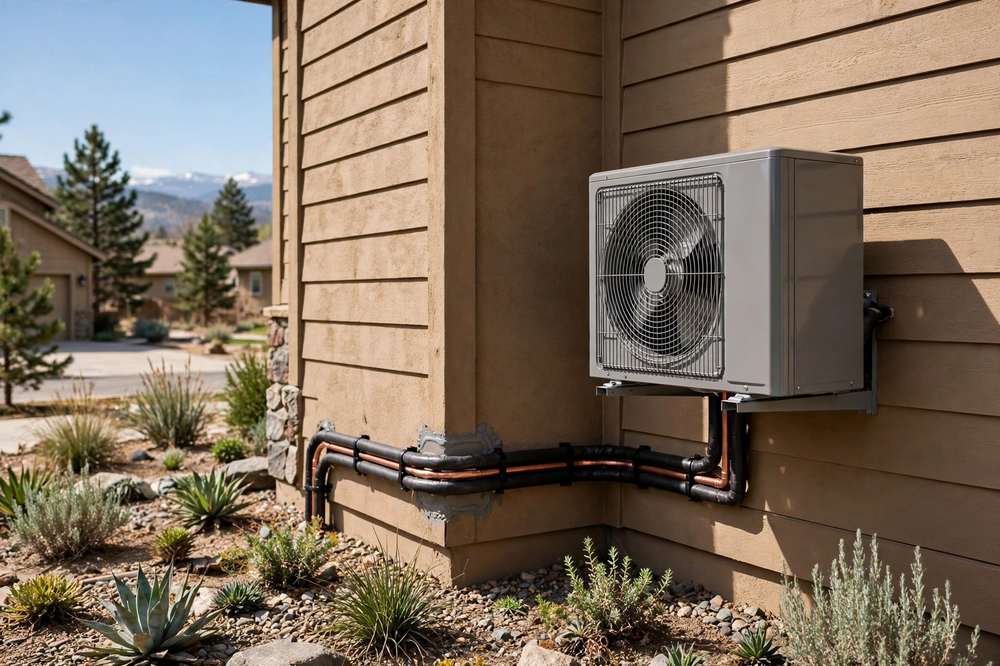
A ductless install fits a wall-mounted indoor head and an outdoor unit, joined by refrigerant lines, a drain and power through a small opening in the wall. Each head heats and cools its own room, so an addition, a converted garage or a hot upstairs bedroom gets its own temperature.
Denver has plenty of homes a mini-split suits: pre-war houses in Capitol Hill, Park Hill and Washington Park that never had ducts, mid-century homes with a hot upstairs, newer additions the central system never reached. Cold-climate models are built for cold winters, and the visit looks at the house and the heating already there before anything is decided.
Indoor head, outdoor unit, and the lines joining them — fitted cleanly and tested room by room.
Each head is sized to its own room — windows, orientation, ceiling height, use. A head sized for a bedroom never suits a sun-facing living room, so sizing is done per room.
The wall unit mounts high on an inside wall with clear airflow across the room, away from direct sun and draughts. Placement decides how evenly the room heats and cools.
The outdoor unit sits on a level pad or wall bracket with clear air around it, and the line set runs neatly through the wall with a weather-sealed sleeve.
Copper lines are run, pressure-tested and evacuated, and the condensate drain is run so water leaves the house rather than pooling behind the head.
Electrical supply is connected and the remote or wall control is set up together, so each room's temperature is set the way you want it.
Once fitted, each head is run through heating and cooling, with temperatures taken at the head and across the room, before anyone leaves.
Ring (720) 806-7634 and name the rooms needing heating or cooling, and what the house is like. The conversation covers whether a mini-split fits and how many heads the rooms need.
A visit follows: rooms and the outside wall are looked at, each head sized to its room. You hear where heads and the outdoor unit would go, and what the work involves.
Indoor heads are mounted, the outdoor unit placed, and line sets, drain and power run through the wall. The opening is sealed and weatherproofed.
Lines are pressure-tested, evacuated of air and moisture, and charged. A system charged by guess never heats or cools as built.
Each head is walked through with you — remote, filter — and a written record of the equipment fitted and the work done stays behind.
A clean mini-split install is careful work at small scale. These tools do it.
It sizes each head to its own room from windows, orientation and use, so no room is over- or under-served.
While the system charges, pressures are read so the refrigerant matches what the maker specifies.
It evacuates the refrigerant lines of air and moisture before charging. Moisture left inside damages the compressor from within.
It checks every flare and joint after the lines are charged. A system holding charge on the day holds it through the seasons.
Flare connections are tightened to the maker's specification. Too tight and they crack and leak; too loose and they weep.
They keep heads level for proper drainage and cut a clean, sealed opening for the line set through the wall.
A two-storey home in Denver has a central system that never cools the upstairs bedrooms. The family sleeps with window units in summer.
A head is sized for the bedroom, outdoor unit placed where the line set runs short and clean. The bedroom gets its own temperature.
A pre-war home in Denver has radiators for heat and no ducts. The owners want cooling without tearing the house apart.
Heads go in the main living rooms and bedrooms, with one outdoor unit serving them. No ducts are needed anywhere in the house.
An addition in Denver was never connected to the central system. It runs cold in winter and hot in summer.
A head is sized for the addition alone. It heats and cools on its own, without touching the main system.
A mini-split is the right answer when ductwork is missing, impractical, or never reached the room. These are the cases seen most.
Ask a pro →A room added after the central system was built usually has no duct run. A mini-split gives it heating and cooling on its own, without extending the ducts.
Upstairs rooms sit above the heat of the house and at the end of the longest duct runs. A head in the bedroom sets its own temperature.
Denver's pre-war homes often heat with radiators and have no ductwork at all. A mini-split adds cooling — and shoulder-season heating — without ducts.
A room used all day, or one with a wall of glass, needs its own temperature. A head in that room keeps it comfortable without overcooling the rest of the house.
Many pre-war Denver homes were built with radiators and no ductwork at all, so a wall-mounted head is often the only cooling that fits without opening walls — the line set goes through one small opening.
Eleven Google reviews, all five stars: that is the record behind Lion Tech Home Services' 5.0-star rating.
“Martin was great! Timely, knowledgeable, and his experience showed. He was able to fix our HVAC that had been having trouble on and off for awhile. Pricing was good and reasonable! Would certainly recommend!”
Julie — Google review
One outdoor unit can serve several indoor heads, each in its own room with its own temperature. How many depends on the rooms and the outdoor unit — visit and room sizing settle it.
Cold-climate models are built for cold winters, and a dual-fuel set-up — mini-split plus the existing furnace — covers the coldest nights. The visit looks at the house and the heating already there before anything is decided.
It turns on how many heads the rooms need, where the outdoor unit goes, and how long the line sets run. Visit and room sizing come first; you hear what the work involves before anything is booked. Ring (720) 806-7634 to talk it through.
No. The indoor head mounts on the wall and connects to the outdoor unit through a small line set in the wall. That is the point of the system — heating and cooling for rooms the ducts never reach.
Ring (720) 806-7634. Name the rooms needing heating or cooling, and the mini-split question gets talked through.
Call (720) 806-7634 →Lion Tech Home Services, Denver — call (720) 806-7634, open 24 hours.