A capacitor going weak
A capacitor on its way out only ever warns on a meter. Spring testing flags it before the first heat wave strands the house.
A tune-up is one spring visit with a set order: the outdoor unit first, then the indoor coil and airflow, then the readings that show whether the system is ready for the first long hot stretch.
The spring visit goes in the diary when you ring (720) 806-7634. Lines are open 24 hours, 7 days a week — say how old the system is and when it was last opened.
Call Now (720) 806-7634 →Phone-only booking — ring and the visit is arranged.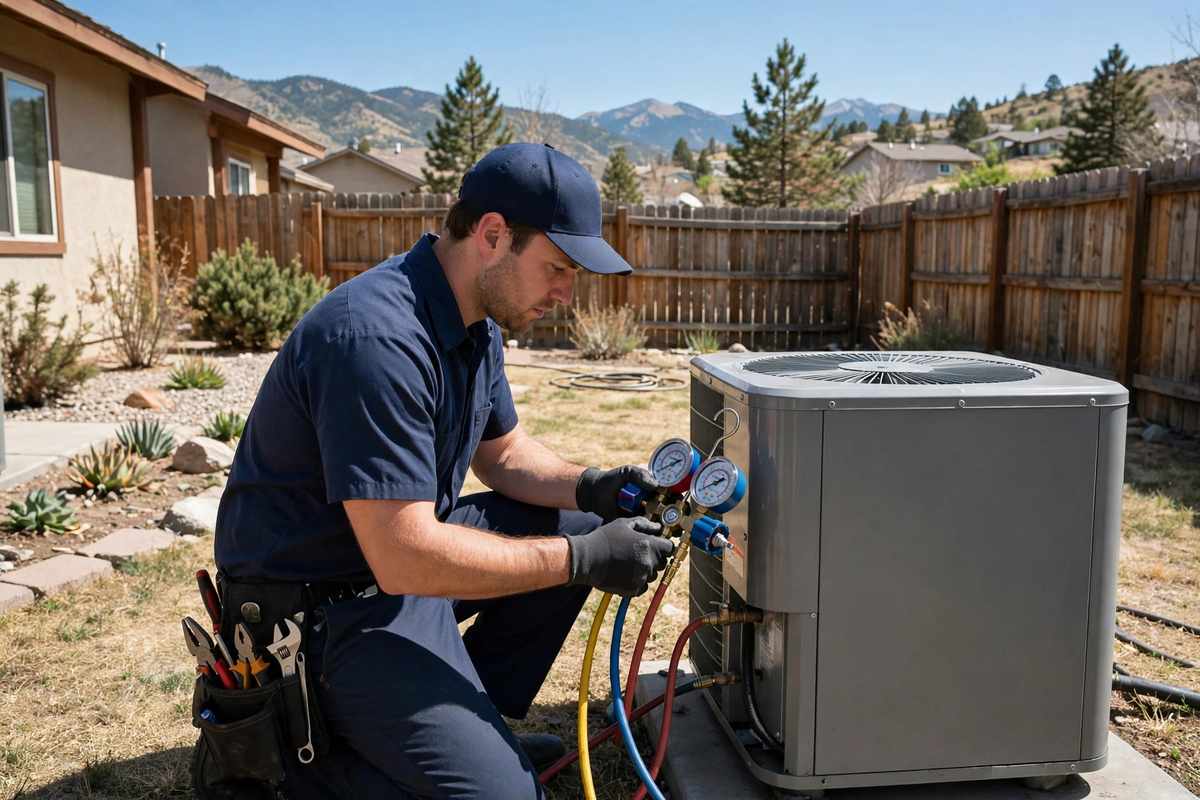
A tune-up is one visit, done in spring, for a central air conditioner. Coil cleaned, charge read, capacitor tested, filter checked, drain looked at — then a cooling run with the temperature drop measured.
Dust is the Denver problem: dry summers pack the outdoor coil, and thin mountain air already trims what the system can do. Catching a dirty coil or a tired capacitor in March or April leaves weeks to sort it. Older central systems in Denver's mid-century neighbourhoods gain the most.
Six checks, always in the same order, each one with a reading attached.
The outdoor coil comes clean of dust and fluff so air passes through it freely again. A clogged coil is what turns a working system into one that runs all afternoon.
Suction and discharge pressures are compared with the maker's figures. When the charge has slipped, the leak gets traced — topping up alone just postpones the next call.
The capacitor gets a meter reading, along with the contactor. July is when weak capacitors give up, so spring is when they get caught.
The indoor coil is looked at, the filter swapped when it is loaded, and the blower wheel checked for the dust that strangles airflow.
The drain gets checked for a blockage. Condensation should leave the house, not sit in the pan and trip the float switch.
The system runs a cooling cycle end to end while the drop across the coil is measured — proof it cools as built before the season starts.
Ring (720) 806-7634 and describe the system: its age, its last check, anything odd you have noticed. The visit is arranged and the checklist talked over.
Work starts at the outdoor unit. The coil is washed clean, bent fins are combed straight, and the fan motor, capacitor and contactor are meter-tested.
Next, the indoor side: coil looked over, filter swapped if it is loaded, and airflow taken through the system.
Pressures and temperatures are taken, the drop across the coil is measured, and a full cooling cycle is run.
Findings come back in plain language — what is worn, what is fine, and what to keep an eye on through the summer.
Spring readiness is a set of readings. These are the ones that count.
On the service ports, they show suction and discharge pressure to set against the maker's specification.
The meter reads the capacitor's charge and looks at contactor and fan motor for wear — the component likeliest to give up on the first hot weekend.
A fin comb straightens bent fins so the outdoor coil breathes freely again after a dusty spring.
Return and supply probes show the gap between incoming and outgoing air — how hard the coil is truly cooling.
Readings across the filter and blower reveal whether air moves freely or is being strangled somewhere along its path.
Soft brush and coil cleaner take a season of dust off the outdoor coil without folding any fins.
In Denver, a central AC cooled a little less every week of last summer, and the homeowner wants it fixed before this one.
Coils cleaned, charge read, capacitor meter-tested, then a cooling run with the temperature drop measured.
A family that moved to Denver recently has a central AC nobody has ever serviced, with no record of its age. They want to know its condition before summer.
Every item on the tune-up list gets worked through, and the findings come back in plain words.
In Washington Park, a central AC has sat unopened since the day it was fitted. It still cools, yet the outdoor coil is thick with dust.
Coil cleaned, capacitor and controls tested, charge checked, drop across the indoor coil measured.
Summer breakdowns usually warn in spring. Here is what the visit is designed to catch.
Ask a pro →A capacitor on its way out only ever warns on a meter. Spring testing flags it before the first heat wave strands the house.
Dust on the outdoor coil stretches run times while cooling less. A spring wash gives the coil its airflow back.
Charge falls only when something leaks. A spring reading catches the leak while the house is still comfortable.
A loaded filter starves airflow and can freeze the indoor coil, which looks exactly like a broken system. It gets checked and changed on the visit.
Denver sits at 5,280 feet with only around 750 to 1,000 cooling degree days a year, so a central AC here is a short-season workhorse — and a spring check is what keeps it ready for the weeks it matters.
Eleven Google reviews, each one five stars — that is the whole record behind the 5.0-star rating for Lion Tech Home Services.
“Martin does great work, is very transparent about costs, and most importantly backs up his work and will double back if needed without a question. I'll absolutely be using Lion Tech again when I need help around my homes.”
Dominic East — Google review
A tune-up is a single spring visit that readies the system for summer. Maintenance is the standing schedule that keeps those checks coming year after year — see the HVAC maintenance plans page for how the visits are set out. Same work on the day; one happens once, the other on a calendar.
Spring, while the weather is still mild. March to May is when most Denver homeowners book it — once the 90s arrive, the system is already at full load.
A coil clean inside and out, a charge reading, capacitor and control tests, a filter and blower check, a drain look, and a cooling-cycle test with the temperature drop measured.
Yes. Cooling fine today says nothing about a capacitor losing strength or a coil slowly clogging. Both quit without warning, and the tune-up finds them first.
Ring (720) 806-7634 and put the spring visit in the diary. The checklist is worked in order, and the findings come back in plain words.
Call (720) 806-7634 →Lion Tech Home Services, Denver — call (720) 806-7634, open 24 hours.