Repairs coming one after another
A big part every winter says more than one breakdown on its own. Repair history is weighed against the unit's age and condition.
Choosing a new boiler is a long-term call for a house built around hot water. The boiler has to match the house and its radiators, and the sizing, the piping and the venting are done as one job.
The phone is answered around the clock. Ring (720) 806-7634, say what boiler you have and what radiators it feeds, and the repair-or-replace question is talked over.
Call Now (720) 806-7634 →Phone-only booking — ring and the boiler is talked through.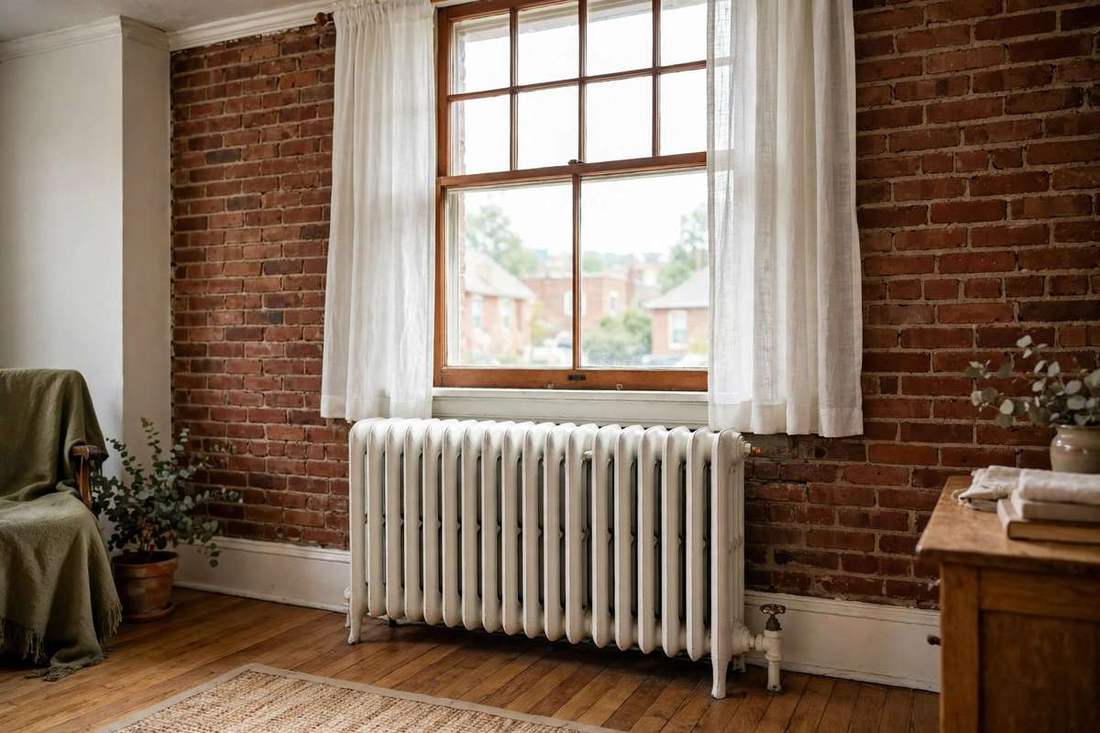
Swapping a boiler means the old hot-water unit comes out, the new one is sized to the home's heating load and its radiators, and piping, flue, gas line, pump and controls are fitted. Sizing decides whether radiators heat evenly or the far rooms stay cold.
Pre-war Denver ran on boiler heat. Streets in Capitol Hill, Washington Park, Highland, Congress Park and Cheesman Park still warm themselves with cast-iron radiators or baseboards, many fed by boilers decades old. A new boiler has to fit the radiators it serves, not just the floor area.
Boiler, piping, and proof that heat reaches every room — the whole job, not just the unit.
Insulation, windows and orientation are measured, and the radiators are counted, so the boiler is sized to the home rather than to a square-footage guess.
The new boiler goes in and is joined to supply and return piping, the near-boiler pipework laid out so water flows evenly to every zone.
Flue run so combustion gases vent properly, gas line joined up and leak-checked at every joint.
Circulator pump and expansion tank go in and are set for the system. A wrongly set tank is the most common source of pressure trouble after a new install.
Thermostat and zone controls go in together and are set up so each zone calls for heat and gets it.
Once fitted, the boiler runs a full heat cycle while each radiator is checked in turn, so the far rooms are known to heat too.
Ring (720) 806-7634 and tell us the boiler you have — its age, its faults, the radiators it serves. The talk covers whether repair or replacement fits.
A visit follows: boiler and piping looked over, radiators counted, and the house measured so the load can be worked out. You hear which sizes fit and why.
Installation day: the old boiler comes out and is taken away, the new unit set and piped, flue and gas line connected, and every gas joint checked with a leak detector.
The system is filled, air bled from the radiators, and flow balanced so far radiators heat the same as near ones.
The new boiler is walked through with you — pressure gauge, fill valve — and a written note of the boiler fitted and the work done is left with you.
A boiler install is measured work, first visit to last radiator check. The instruments below do the measuring.
Heat loss is modelled and radiators counted, so the boiler is sized to the house rather than to a square-footage guess.
Once the new boiler is running, the analyser reads carbon monoxide and flue temperature to show clean burning and correct venting.
Gas pressure at the valve is set to the maker's specification, Denver altitude counted in.
Every gas joint is checked after the install, and the water side is confirmed to hold pressure before the system is left running.
Hot and cold pressure, with supply and return temperatures — the readings that set fill and tank correctly.
While balancing, each radiator's temperature is read in turn, so far rooms end up heating like near ones.
A Capitol Hill boiler from the 1980s has broken down twice in two winters, and the exchanger is showing its age.
Boiler condition, repair history and piping are weighed together, and the talk covers whether to repair again or replace for that house.
Far bedrooms stay cold while radiators near the boiler run hot.
Pump, piping and balancing are looked at during the sizing visit. A new boiler alone never fixes a piping problem, so piping joins the talk.
In Washington Park, a brick home's boiler runs all the time on the coldest nights yet still falls short of the thermostat setting.
The heat load is worked out at altitude. A boiler sized for sea-level conditions often falls short in a Denver winter after the derate is counted.
An old boiler is not always due for replacement. A few patterns point that way. These are the ones weighed with homeowners.
Ask a pro →A big part every winter says more than one breakdown on its own. Repair history is weighed against the unit's age and condition.
Cracks or corrosion in a heat exchanger make it a safety matter, and a combustion check finds the damage. A damaged exchanger usually ends talk of repair.
Far radiators cold and near ones hot often mean the boiler and its piping no longer suit each other, so sizing and flow get checked together before anything is decided.
Efficiency slipping shows up first on the gas bill, ahead of any breakdown. Combustion and flow are looked at to find how much loss sits in the unit itself.
Denver's pre-1940 homes were often built around coal-fired boilers later converted to gas, with radiators and no ductwork — the stock a new boiler has to fit, radiator by radiator.
All 11 Google reviews for Lion Tech Home Services are five stars, for a 5.0-star rating.
“Martin does great work, is very transparent about costs, and most importantly backs up his work and will double back if needed without a question. I'll absolutely be using Lion Tech again when I need help around my homes.”
Dominic East — Google review
By working out the heat load: the home is measured — insulation, windows, orientation — and the radiators it serves are counted, Denver's altitude counted in. Output falls with elevation, so a sea-level size comes up short here.
Cost turns mostly on the size the home needs, and on the state of piping, flue and gas line. Everything is explained before anything is booked, after a visit and a load calculation. Ring (720) 806-7634 to talk it over.
Usually. Cast-iron radiators outlast the boilers that feed them by decades. Radiators, valves and piping are checked on the visit, and the talk covers what needs attention and what does not.
The old boiler comes out and is carried away as part of the job, and the space is left tidy. A note of the boiler fitted and the work done is left with you.
Ring (720) 806-7634, say what boiler you have and what radiators it feeds, and the repair-or-replace question is talked over.
Call (720) 806-7634 →Lion Tech Home Services, Denver — call (720) 806-7634, open 24 hours.