How to Stop a Ductless Mini-Split From Freezing Up
Learn how to stop a ductless mini-split from freezing up in Denver. Causes, fixes, defrost tips, and when to call a pro for mini split repair.
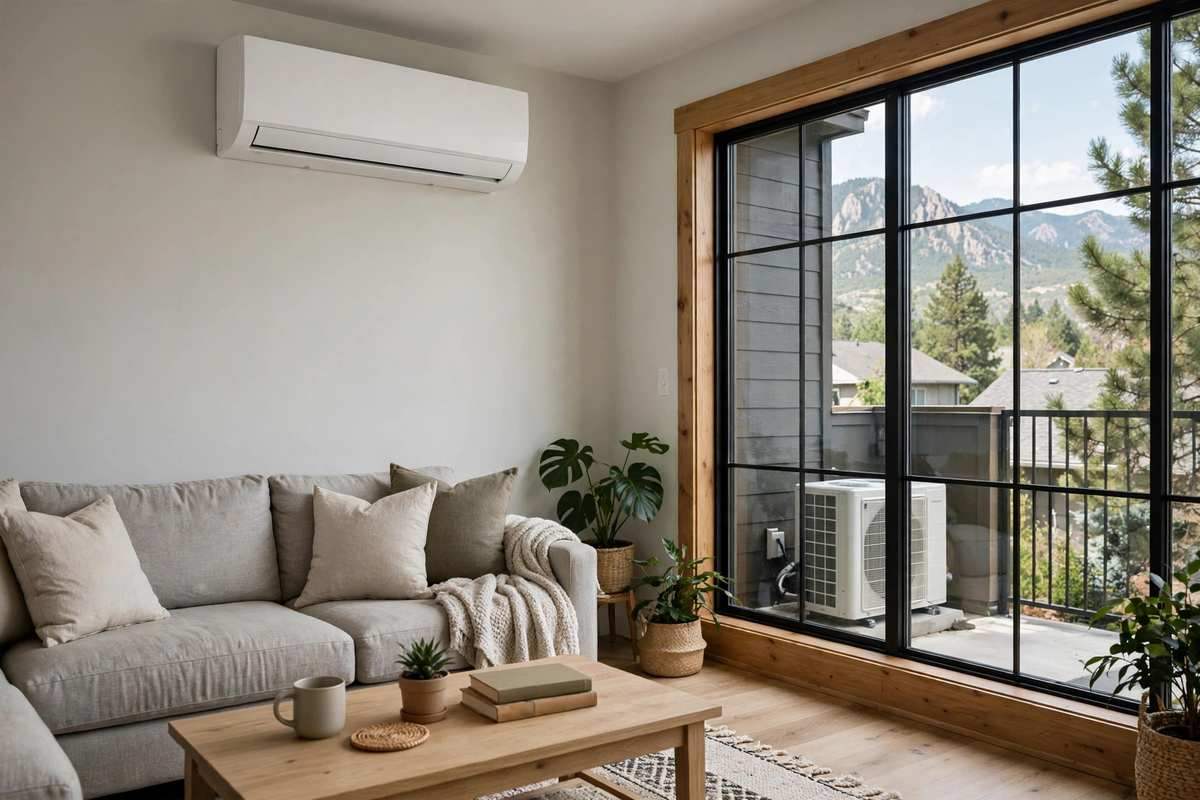
To stop a ductless mini-split from freezing up, you need to restore airflow and confirm the refrigerant charge is correct. A frozen coil almost always traces back to a clogged filter, a blocked outdoor unit, low refrigerant from a leak, or a defrost cycle that can't keep up with Denver's cold snaps. How to stop a ductless mini-split from freezing up is really a process of elimination: check the easy airflow fixes first, then bring in a technician if the ice returns.
We handle these calls across the metro every winter, and the pattern is consistent. Below we walk through the causes, how to safely defrost the unit, and the maintenance habits that keep ice from coming back.
Why is my mini split freezing up in Denver?
Your mini split freezes in Denver because the indoor coil drops below 32°F while moisture in the air condenses and ices over. That happens when airflow across the coil is restricted or when the system is low on refrigerant and the coil runs colder than it should. Denver's dry air doesn't prevent this; the moisture comes from cooking, showers, and the humidifier running all winter.
In heating mode, the outdoor unit is the one that frosts. Every heat pump runs a defrost cycle to melt that frost, and when the cycle is short-cycled or the reversing valve sticks, ice builds until the unit stops transferring heat. We see this most on older systems and on units installed without a proper cold-climate kit.
One more local factor: our 5,280-foot elevation and single-digit January nights push heat pumps harder than the same unit would work at sea level. A system that was marginal in mild weather will ice up fast when it's 8°F outside.
The five causes we find most often
Across the Denver mini split problems we see, these five account for nearly every frozen coil we diagnose. Work through them in order - the first two you can check yourself in ten minutes.
1. A clogged or dirty air filter
When the filter loads up, the blower can't pull enough warm room air across the coil. The coil temperature drops, condensation freezes, and you get ice on the indoor head. On most wall units the filter should be rinsed every 2-4 weeks during heating season. If you haven't touched it since fall, start there.
2. A blocked outdoor unit
The outdoor condenser needs to move air freely. Snow piled against it, leaves packed into the fins, or a cover left on after summer will cause ice buildup fast. Clear a 2-foot perimeter and make sure the unit sits above the snow line. We see this constantly in HVAC Denver CO homes where the outdoor unit is tucked against a fence or under a deck.
3. Low refrigerant from a leak
A system that's low on refrigerant runs a coil colder than designed, and that coil ices over. If your filter is clean and the outdoor unit is clear but ice keeps returning, a leak is the likely culprit. This is not a top-off situation - refrigerant doesn't get used up, so a low charge means it escaped somewhere. A technician needs to find and repair the leak before recharging.
4. A failing defrost cycle
Heat pumps switch into defrost mode to melt frost off the outdoor coil. A bad defrost sensor, a stuck reversing valve, or a control board fault will leave the unit iced up. If you see a solid block of ice on the outdoor unit after a cold night, the defrost cycle is the first thing to test.
5. Dirty coils and blocked drains
Dust on the indoor coil insulates it and traps moisture. A clogged condensate drain backs water up into the unit, and in freezing weather that water turns to ice. Both are maintenance items, and both are cheap to prevent. Our ductless mini-split repair Denver CO service cleans and tests both as part of a standard service call.
How to defrost a mini split in Denver
To defrost a mini split in Denver, shut the system off at the thermostat and let it sit - do not chip at the ice or pour hot water on it. Give it 2-4 hours with the fan in a warm room, or use the unit's own defrost mode if it has one. Chipping ice with a tool is how coils get punctured, and a punctured coil turns a small service call into a major repair.
Here's the safe sequence:
- Turn the system off at the remote and the breaker if you can reach it safely.
- Clear snow and debris from around the outdoor unit.
- Let the ice melt naturally. A towel under the indoor head catches the drip.
- Once melted, clean the filter and inspect the coil for visible dirt.
- Restart and watch for 20-30 minutes. If ice starts forming again immediately, stop and call a technician.
Never use a heat gun or hair dryer on the indoor coil. The plastic housing warps at temperatures a heat gun reaches in seconds, and the refrigerant lines don't like concentrated heat either.
How to stop a ductless mini-split from freezing up in Denver
Stopping the freeze is mostly about airflow and maintenance, with a technician visit if refrigerant or defrost components are involved. Here's what actually works, in the order we recommend it.
Keep the filter and coils clean
Rinse the indoor filter every 2-4 weeks in heating season and have the coils cleaned professionally once a year. This single habit prevents the majority of frozen-coil calls we run.
Protect the outdoor unit from snow
Build or buy a snow stand so the unit sits 12-18 inches above grade, and never cover it while it's running. After a heavy Denver snow, clear the area around it before you run the heat.
Schedule a pre-winter tune-up
A fall check catches low refrigerant, a weak defrost sensor, and dirty coils before the first hard freeze. Our ductless mini-split installation Denver CO service also commissions new systems with a cold-climate setup so they handle Colorado winters from day one.
Run the system steadily, not in short bursts
Short cycling doesn't let the coil reach a stable temperature, and it stresses the defrost cycle. Set the thermostat and leave it. If your unit short cycles, that's its own problem worth diagnosing.
Watch for the early signs
Reduced airflow, a hissing sound, or ice on the line set are warnings. Catching them early is the difference between a small service call and a compressor replacement.
Common mistakes to avoid
The most common mistake we see is homeowners chipping ice off the coil with a screwdriver or knife. That punctures the coil and releases the refrigerant - a repair that costs far more than the service call it started as. Other mistakes that cost real money:
- Adding refrigerant without finding the leak. It'll leak out again, and you'll be back where you started.
- Running the system with ice on it. This strains the compressor, the most expensive part to replace.
- Covering the outdoor unit while it runs. It needs airflow to shed heat and frost.
- Ignoring a clogged drain. Water backs up, freezes, and can crack the drain pan.
If you're in an older neighborhood like mini split freezing in Highland Denver, where homes often have retrofitted systems and tight outdoor clearances, these mistakes compound fast. We see more ice-related calls there than almost anywhere else in the city.
When to call a professional
Call a professional when ice returns within a day of defrosting, when you see ice on the refrigerant lines, or when the outdoor unit is a solid block. Those point to refrigerant or defrost faults that need gauges and a leak detector, not a filter rinse.
We at Lion Tech Home Services handles frozen mini splits across Denver, from a simple coil clean to a full leak search and recharge, and we also handle heat pump repair in Denver for whole-home systems. We diagnose the cause, fix it, and test the system before we leave. If you're not sure whether it's a DIY fix or a repair, call us and we'll tell you straight.
Frequently Asked Questions
Why is my mini split freezing up in Denver?
Your mini split freezes because airflow is restricted or the refrigerant charge is low, dropping the coil below freezing. In Denver, clogged filters, snow-blocked outdoor units, and defrost faults are the top three causes we find.
How do I stop my mini split from freezing in Denver CO?
Clean the filter every 2-4 weeks, keep the outdoor unit clear of snow, and schedule a fall tune-up. If ice returns after those steps, a technician needs to check the refrigerant charge and defrost cycle.
What causes a mini split to freeze in Denver?
Dirty filters, blocked outdoor airflow, low refrigerant from a leak, a failing defrost sensor, and dirty coils cause most freezes. Denver's cold snaps and high elevation make marginal systems ice up faster than they would at lower altitudes.
Who repairs frozen mini splits in Denver?
Lion Tech Home Services repairs frozen mini splits across the Denver metro. We diagnose the cause, repair the leak or defrost fault, and test the system before we leave. Call (720) 806-7634 to schedule.
Get help with Hvac in Denver
A frozen mini split won't fix itself, and running it iced over is how compressors fail. Call Lion Tech Home Services at (720) 806-7634 and we'll get your system thawed, diagnosed, and running right.