How to Clean or Replace an AC Filter
Step-by-step guide to cleaning or replacing your AC filter in Denver. Learn filter sizes, how often to change it, and when to call a pro.
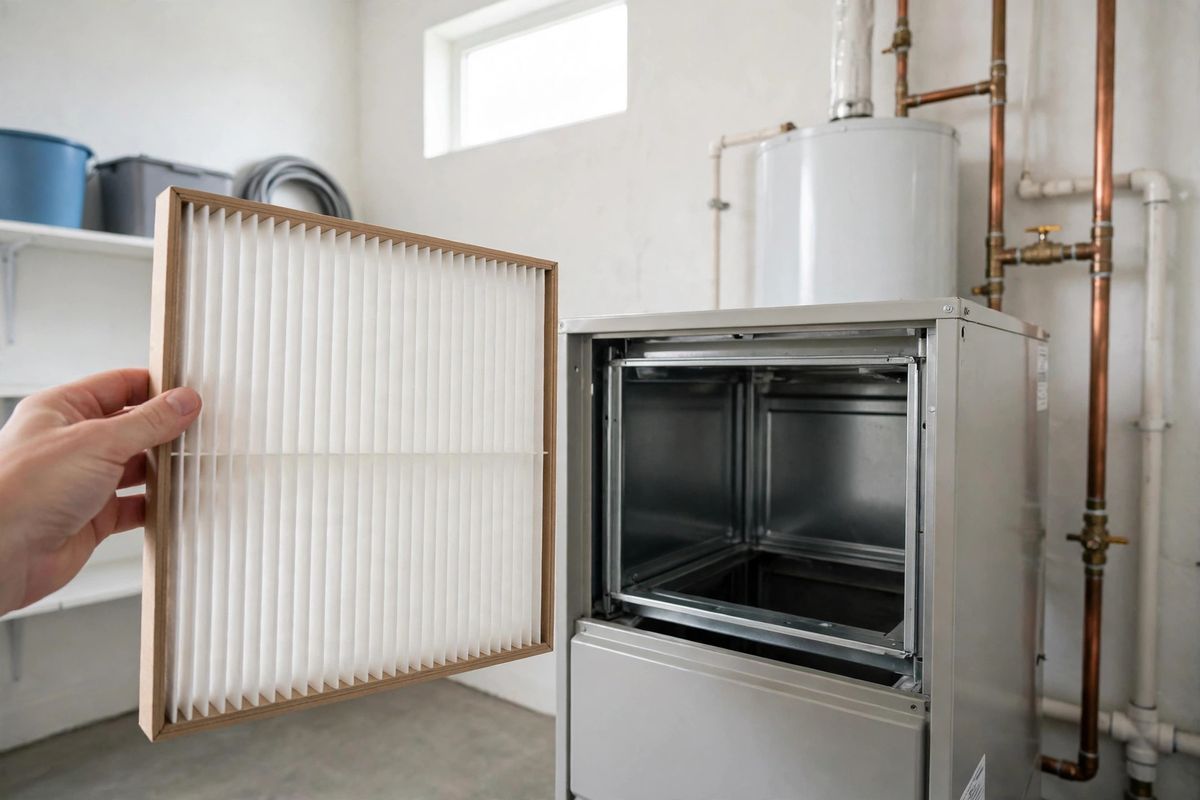
Cleaning or replacing an AC filter takes about 10 to 20 minutes: turn the system off, slide the old filter out of the return grille or air handler slot, vacuum or rinse it if it is washable, and slide a new filter back in with the arrow pointing toward the blower. If the filter is disposable and gray with dust, replace it - do not try to wash it. That is the whole job, and it is the single highest-return maintenance task on any Denver air conditioner.
We are Lion Tech Home Services, and we change filters on Denver systems all year. Below, we walk through filter sizes, how often to change them in Denver's dust and wildfire-smoke seasons, which MERV rating actually makes sense for your home, and the mistakes that quietly kill compressors.
Why Your AC Filter Matters More in Denver
Your AC filter protects the blower motor and evaporator coil from the dust, pollen, and pet hair that Denver's dry air keeps suspended indoors. When that filter loads up, airflow drops, the coil ices over, and the compressor runs longer and hotter than it was designed to.
Denver makes this worse than most cities. We sit at 5,280 feet, the air is thin and dry, and from roughly May through September we get weeks of wildfire smoke drifting in from the mountains and the West Coast. A filter that would last three months in a humid climate can be visibly gray in six weeks here. Add the spring pollen dump from cottonwoods and junipers, and you have a filter that is doing real work.
Here is what a clogged filter actually costs you:
- Blower motor amp draw climbs, which shortens motor life.
- Evaporator coil ices, which drops cooling capacity by 20 to 40 percent.
- Compressor runs longer cycles, which is the most expensive part in the system.
- Energy bills climb 5 to 15 percent in a typical Denver summer.
None of that is dramatic on day one. It shows up as a system that runs all afternoon and never quite gets the house below 76 degrees. If you are already seeing that, we handles air conditioning repair Denver CO and can tell you in one visit whether the filter is the whole story or whether something else is starving the system.
How Often Should You Replace Your AC Filter in Denver?
In Denver, replace a standard 1-inch disposable AC filter every 30 to 60 days during cooling season, and every 60 to 90 days in winter if the furnace shares the same filter. Thicker 4- to 5-inch media filters last 6 to 12 months because they have far more surface area.
Those are the baseline numbers. Adjust them for your house:
- Pets: one dog or cat moves you to the 30-day end of the range. Two or more, check monthly.
- Wildfire smoke: if the AQI in Denver sits above 100 for a stretch, check the filter when the smoke clears.
- New construction or renovation: drywall dust will destroy a filter in two weeks. Change it, then change it again.
- Older Denver homes: the bungalows and Victorians in Congress Park, Baker, and Wash Park leak air around old windows and doors, so they pull in more dust than a tight 2015 build.
- Allergies: if someone in the house is sneezing through July, you are overdue.
The honest test is visual. Pull the filter, hold it up to a light. If you cannot see light through it, it is done - the calendar does not matter. If you would rather not think about it, our HVAC maintenance plans Denver CO include filter checks on every visit so the schedule runs itself.
What Size AC Filter Do You Need in Denver, CO?
Your filter size is printed on the cardboard frame of the old filter, usually as three numbers like 20x25x1 - width, height, and thickness in inches. If the print has worn off, measure the frame opening yourself with a tape measure.
Denver homes use a handful of sizes over and over. The most common in our service area:
- 16x25x1 - standard for many 1970s-1990s ranches and two-stories.
- 20x25x1 - common in larger suburban homes.
- 20x20x1 and 14x25x1 - frequent in older Denver square and bungalow floor plans.
- 24x24x1 and 25x20x1 - larger return grilles in newer builds.
- 4-inch and 5-inch media cabinets - 16x25x4, 20x25x5, and similar, usually in a dedicated filter cabinet next to the furnace.
Two things trip people up. First, the nominal size on the box is not the exact size - a "20x25x1" filter is often 19.5 x 24.5 x 0.75 inches, and that is normal. Second, if you have a filter cabinet, the filter is thick and lives in a slot on the side of the furnace, not behind a wall grille. If you cannot find yours, that is a five-minute call for us.
How to Replace Your AC Filter: Step by Step
Replacing a disposable AC filter is a job you can finish before your coffee gets cold. Here is the sequence we use:
- Turn the system off. At the thermostat, switch to OFF. If the filter sits in the air handler, kill power at the furnace switch too.
- Find the filter. Look for a large return grille in a hallway or ceiling, or a slot on the side of the furnace or in a filter cabinet.
- Note the arrow. There is an arrow printed on the filter frame. It points in the direction of airflow - toward the blower and furnace, not back toward the return duct.
- Slide the old filter out. Watch for a latch, a thumb screw, or a hinged door on the cabinet.
- Match the size. Read the numbers off the old frame and buy the same size. Do not force a filter that does not fit.
- Slide the new filter in with the arrow pointing the same direction as the old one.
- Close the door, restore power, and set the thermostat back to COOL. Confirm air is moving at the vents within a minute.
Write the install date on the filter frame with a Sharpie. Next time you will know exactly how long it has been in there, which beats guessing.
How to Clean a Washable AC Filter
Only clean a filter if the manufacturer labels it washable or reusable - most 1-inch filters are disposable and washing them destroys the media and can push mold into your ductwork. Washable filters are usually the thicker, metal-framed or plastic-framed type.
If yours is washable, here is how we clean them:
- Turn the system off and pull the filter.
- Vacuum both sides with a brush attachment to lift the loose dust.
- Rinse with lukewarm water from the clean side toward the dirty side. Never use a pressure washer.
- For grease or heavy film, use a few drops of mild dish soap. Skip harsh chemicals.
- Let it air-dry completely - 2 to 4 hours, ideally in the sun. A damp filter grows mold fast in a Denver HVAC closet.
- Reinstall with the airflow arrow pointing toward the blower.
Washable filters still need replacing every 1 to 3 years. The frame lasts; the media does not.
Best AC Filter for Denver Homes
For most Denver homes, a MERV 8 to MERV 11 filter is the sweet spot - it catches pollen, dust, and most smoke particles without choking airflow. MERV 13 and higher trap more, but they also add resistance that many residential blowers cannot handle.
Here is how the ratings shake out for our climate:
- MERV 6-8: basic dust and pollen protection. Fine for a system with a 1-inch slot.
- MERV 8-11: our default recommendation for Denver. Handles wildfire smoke season reasonably well.
- MERV 13: good for allergy households, but only if your system has a 4- or 5-inch media cabinet or the blower is rated for the static pressure.
- MERV 14+: hospital-grade. Do not put this in a standard residential return - you will starve the system.
If someone in the house has asthma or you want serious smoke protection during August, the better answer is usually a media cabinet upgrade plus a standalone air purifier, not a thicker filter in a 1-inch slot. We install and service indoor air quality services Denver CO for exactly this reason, and we will tell you honestly when a filter upgrade is not the right fix.
Common Mistakes We See on Filter Changes
The most common mistake is installing the filter backward - arrow pointing toward the return duct instead of the blower. The filter still catches dust, but it loads unevenly and can bow into the blower.
Other problems we run into constantly:
- Running without a filter. Dust coats the evaporator coil and blower wheel. Cleaning that coil costs far more than a year of filters.
- Buying the wrong thickness. A 1-inch filter jammed into a 4-inch cabinet leaves a gap that bypasses air around the media.
- Washing a disposable filter. The pleats collapse, the media tears, and you get less filtration than a bare slot.
- Ignoring the second filter. Some Denver homes have a filter at the return grille and another at the furnace. Change both.
- Buying a MERV 16 "for cleaner air." On a 1-inch slot this is a downgrade, not an upgrade.
- Forgetting the filter during a remodel. Drywall dust is the fastest way to kill a blower motor.
If your system has been running on a clogged filter for a while, the coil may already be dirty. That is a job for a technician with coil cleaner and a pump sprayer, not a homeowner with a shop vac.
When to Call a Professional
Call us when the filter is not the problem. If you have changed the filter and the system still blows warm air, ices up, or short-cycles, the issue is upstream - refrigerant charge, a failing capacitor, a dirty coil, or a blower that is on its way out.
We also get calls from homeowners who simply cannot find the filter, or who have a filter cabinet with a size that no big-box store carries. Both are quick visits for we. Lion Tech Home Services handles everything from a filter swap to a full system diagnosis, and we tell you what we find before we touch anything. If you want the filter handled on a schedule along with a coil check and a capacitor test, our preventive HVAC maintenance Denver CO visits cover all of it twice a year.
One more thing worth knowing: if your AC is more than 12 years old and has been running on dirty filters for years, the compressor may be on borrowed time. We can give you a straight answer on repair versus replacement, and if replacement makes more sense, we handle air conditioning installation Denver CO with a load calculation so the new system is sized for your house, not the one next door.
Frequently Asked Questions
How often should I replace my AC filter in Denver?
Every 30 to 60 days during cooling season for a 1-inch filter, and every 60 to 90 days in winter if the furnace shares it. Denver's dust, pollen, and wildfire smoke load filters faster than most climates, so check monthly and replace when you cannot see light through the media.
What size AC filter do I need in Denver, CO?
Read the size off the old filter frame - it is printed as three numbers like 20x25x1. Common Denver sizes are 16x25x1, 20x25x1, 20x20x1, and 14x25x1. If you have a media cabinet, expect a 4- or 5-inch filter instead.
How do I clean my AC filter in Denver?
Only wash it if the manufacturer labels it washable. Vacuum both sides, rinse with lukewarm water from clean to dirty side, and air-dry fully for 2 to 4 hours before reinstalling. Disposable 1-inch filters should never be washed - replace them.
Who can replace my AC filter in Denver?
You can do it yourself in about 10 minutes, or call a local HVAC company for a filter swap during a tune-up. Lion Tech Home Services replaces filters on every maintenance visit and can identify the correct size and MERV rating for your system.
Can a dirty AC filter really damage my system?
Yes. A clogged filter restricts airflow, which ices the evaporator coil and forces the compressor to run longer and hotter. Over a Denver summer that can shorten compressor life by years and add 5 to 15 percent to your cooling bill.
Get Help With HVAC in Denver
If your filter is clean and the house still will not cool, or you want the filter, coil, and blower checked in one visit, call Lion Tech Home Services at (720) 806-7634. We serve Denver and the surrounding metro, and we will tell you exactly what your system needs.