Furnace Installation Cost in Denver by System Type
Furnace installation cost in Denver by system, using Oct/Nov 2026 market ranges: standard, high-efficiency and dual-fuel systems, and what drives the total.
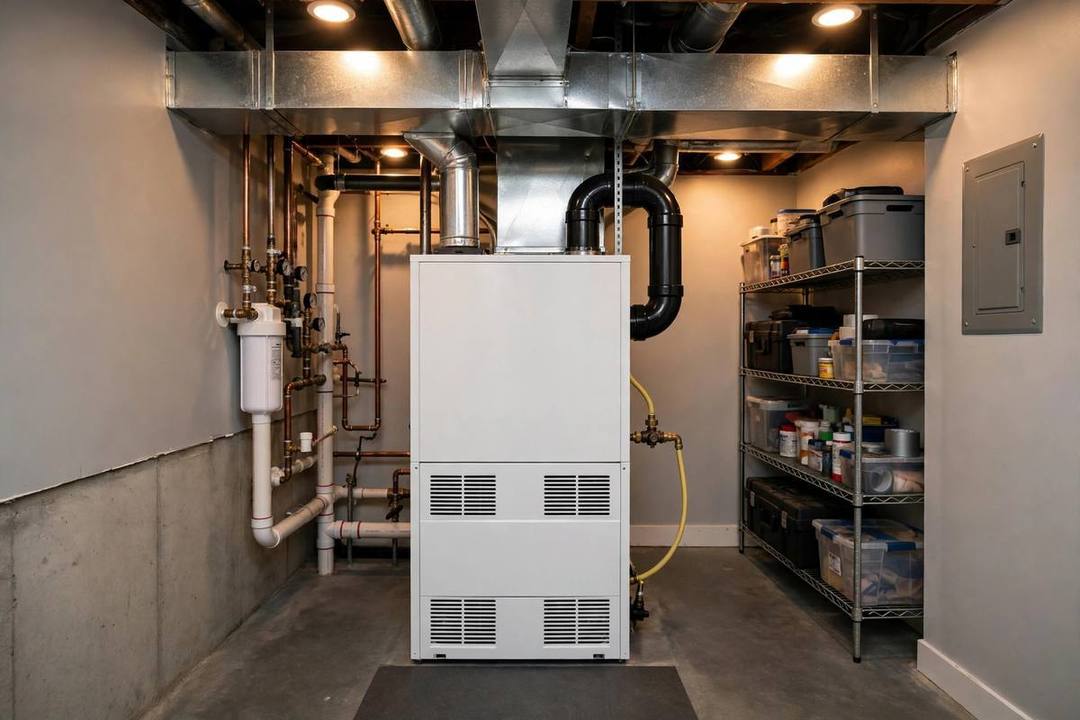
Furnace installation cost in Denver depends on the system type, the size of the house, and what else has to change to support the new equipment. A like-for-like swap in a house with sound ductwork is one job; a high-efficiency condensing furnace that needs new venting, or a heat pump that needs a new electrical circuit, is a different one. This guide works through the system types one by one, using Oct/Nov 2026 market ranges for the Denver area.
Those ranges are market data, not Lion Tech Home Services prices. Your actual quote depends on your home, your ductwork, and the scope of work agreed in writing before anything starts. No rebate figures are given here, because incentive programs change often and any figure from an older article is likely out of date.
What furnace installation costs in Denver
As Oct/Nov 2026 market data for the Denver area, a standard furnace replacement runs roughly $3,800 to $8,650, and a high-efficiency two-stage furnace runs roughly $7,500 to $11,200. A cold-climate heat pump alone runs roughly $6,000 to $14,000, and a heat pump paired with a new furnace runs roughly $21,000 to $28,000 gross. A central AC replacement in the same market data runs roughly $4,500 to $9,500. Those ranges assume existing ductwork in usable condition and a standard 2,000 to 2,500 square foot home.
Denver is a furnace-first market. The city sees roughly 6,000 heating degree days against roughly 750 to 1,000 cooling degree days, in IECC climate zone 5B, at 5,280 feet. That is why the furnace is usually the first decision, and why sizing at altitude matters more here than in most American cities.
Furnace installation cost in Denver by system type
Single-stage 80% AFUE gas furnace
The simplest replacement: one heat output, on or off. It is the lowest-cost option and the right fit for a smaller home with sound ductwork, or for a house where the furnace is being replaced on its own and the budget is the priority. It uses the existing venting in most cases, which keeps the scope simple.
Two-stage 95 to 96% AFUE gas furnace
A high-efficiency condensing furnace with two heat outputs. It runs longer on low heat, which evens out room temperatures and uses less gas than a single-stage unit. It needs different venting, usually a PVC sidewall vent, and a condensate drain, which is part of the scope and part of the cost.
Modulating variable-speed 97%+ AFUE gas furnace
The most efficient gas option, adjusting its output in small steps to match the house. It is the best fit for a larger or well-insulated home where even temperatures matter, and it pairs well with zoning. It is also the most sensitive to ductwork: a modulating furnace on undersized ducts will not deliver what it promises.
Cold-climate heat pump replacing a furnace
A cold-climate air-source heat pump can heat a Denver home on its own, and it also cools in summer, which is why it is the growth segment in this market. It needs a dedicated 240-volt circuit, and some older Denver homes still have 100-amp panels with no spare capacity, so the electrical work has to be in the budget from day one. At Denver's winter design temperature of around 1 degree Fahrenheit, a cold-climate model with inverter-driven capacity is the one to ask about, not a standard heat pump.
Dual-fuel: heat pump plus a new furnace
A heat pump paired with a gas furnace gives you the efficiency of the heat pump in mild weather and the furnace when it gets properly cold. It is the most flexible system for a Denver winter, and the most expensive up front, because you are buying two systems. Ask how the changeover point is set, because that setting decides how much of the winter the heat pump actually carries.
What changes the price beyond the equipment
- AFUE rating. Higher-efficiency furnaces cost more and need different venting and drainage.
- BTU size. A furnace sized by a Manual J load calculation at altitude, not by square-footage rules of thumb, is the only size worth quoting. At 5,280 feet, gas furnaces are derated roughly 4 percent per 1,000 feet, so a sea-level size will not do.
- Venting. A condensing furnace needs a PVC sidewall vent and a condensate drain. If you do not already have one, that is extra work.
- Ductwork. Crushed or disconnected runs, or ducts that were never sized for the new equipment, have to be fixed first, or the new furnace will not deliver its rated efficiency.
- Electrical. A heat pump needs a dedicated 240-volt circuit and disconnect, and a panel with no spare capacity needs an upgrade first.
- Permits and inspection. Denver requires a mechanical permit for furnace, AC, and heat-pump replacement. Ask who pulls the permit and handles the inspection, and get it in the written scope.
How much does furnace installation cost when you add cooling?
Most Denver furnace replacements happen alongside a cooling decision, because the furnace and the AC share the same ductwork and the same blower. Adding a central AC to a furnace replacement is usually cheaper than doing it as a separate job later, and it is the moment to ask about a heat pump instead: a cold-climate heat pump replaces both the furnace and the AC in one system. If your home is in an older neighborhood such as Washington Park, where many houses never had ducted cooling, ask about ductless mini-split installation in Denver as the cooling path that does not need new ducts.
How can I save on furnace installation in Denver?
- Compare scopes, not just totals. Two quotes are only comparable when they name the same equipment, ductwork, venting, electrical work, and permit.
- Fix the ducts first. A new furnace on leaky ducts wastes the efficiency you just paid for.
- Ask about the sizing. An oversized furnace short-cycles and wears out early; an undersized one runs constantly and never catches up in a cold snap.
- Plan the job before the system fails. A furnace that is fifteen years old and has needed two repairs in three winters is telling you something, and a planned replacement is a calmer job than an emergency one.
- Check current incentive programs before you buy. Heat-pump incentives change often and have their own rules and deadlines, so verify the current terms rather than relying on a figure from an older article.
When to call a professional
Call a professional when the furnace stops heating, when you smell gas, when the system short-cycles, or when a repair quote starts to approach a large share of replacement cost. For a planned replacement, call before the heating season: a furnace installation in Denver is a measured job when the house is warm and the schedule is open, and a rushed one when it is not.
We at Lion Tech Home Services will size the system with a Manual J calculation at altitude, check the ductwork, and give you the options in writing before any work starts. If you are weighing a furnace against a heat pump, we will tell you which one fits your house, and you can decide from there.
Frequently Asked Questions
How much does furnace installation cost in Denver?
As Oct/Nov 2026 market data for the Denver area, a standard furnace replacement runs roughly $3,800 to $8,650 and a high-efficiency two-stage furnace runs roughly $7,500 to $11,200. A cold-climate heat pump alone runs roughly $6,000 to $14,000. These are market ranges, not this business's prices.
What is the average furnace installation cost in Denver?
There is no single average that means much, because the range depends on system type, house size, ductwork, and venting. Use the market ranges above as the scale, and compare quotes on scope, not just totals.
Does furnace installation cost vary by system type in Denver?
Yes, a lot. A single-stage 80% furnace is the lowest-cost option, a two-stage 95 to 96% condensing furnace costs more and needs different venting, and a dual-fuel system with a heat pump and a new furnace is the most expensive up front.
How can I save on furnace installation in Denver?
Compare scopes rather than totals, fix the ductwork first, make sure the sizing is a Manual J calculation at altitude, and plan the job before the system fails. Check current incentive programs before you buy rather than relying on older figures.
How long does a furnace installation take in Denver?
A straightforward like-for-like replacement usually takes a day. A job that needs new venting, ductwork changes, or electrical work takes longer, and the written scope should say so before work starts.
Get help with HVAC in Denver
If your furnace is on its last legs, or you are weighing a furnace against a heat pump, call us and we will size the options for your house and put them in writing.
Call Lion Tech Home Services at (720) 806-7634. We are open 24 hours, 7 days a week, and we handle heat pump installation in Denver as well as furnace replacement.