Emergency HVAC Repair in Denver: What to Do First
Furnace dead or AC blowing warm? What to do first for emergency HVAC repair in Denver — safety steps, shut-offs, and when to call for help.
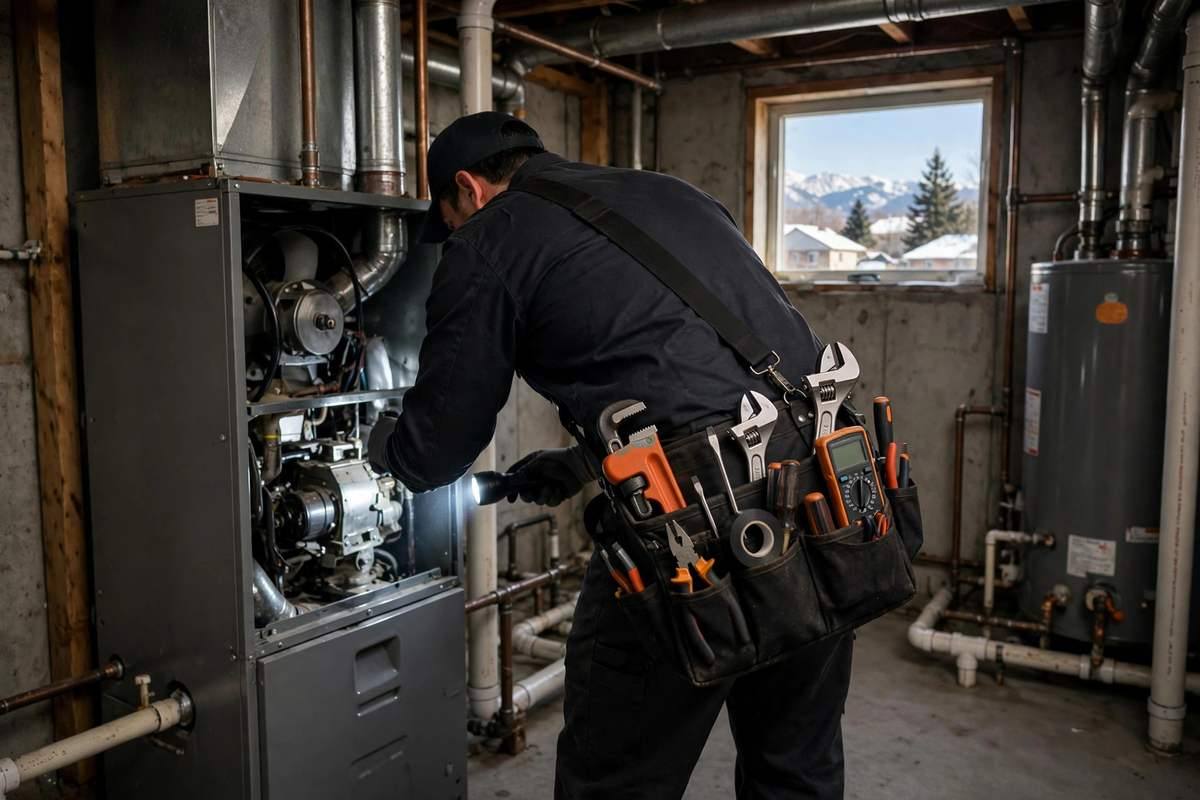
First, make sure no one is in danger: if you smell gas, see flames, or have carbon monoxide alarms going off, get everyone outside and call 911 before anything else. If the house is simply too cold or too hot, the next step is to check the thermostat, the breaker, and the air filter - those three fixes solve roughly one in five emergency calls we run in Denver. What follows is the order we walk homeowners through on the phone, plus what to expect on cost and when it's worth paying for after-hours service.
Emergency HVAC repair in Denver what to do first is really a triage question: separate the life-safety problems from the comfort problems, then act in that order. We'll cover both, because a furnace that quits at 11 p.m. in January and an AC that dies during a July heat wave are two very different nights in this city.
What to do first in a Denver HVAC emergency
In a Denver HVAC emergency, the first move is always safety, then a fast check of the three things you can fix yourself: thermostat settings, the breaker, and a clogged filter. Only after those come up empty do you start calling for service.
Run through this list in order. It takes about five minutes and it will either solve the problem or give the technician a head start.
- Rule out gas and CO. A rotten-egg smell, a yellow burner flame, soot around the furnace, or a chirping CO alarm means shut the system off, open windows, leave the house, and call 911 and Xcel Energy's emergency line. Do not flip switches on your way out.
- Check the thermostat. Confirm it's set to HEAT or COOL, not AUTO or OFF, and that the batteries aren't dead. A thermostat showing a blank screen is usually a battery or low-voltage wiring issue, not a dead furnace.
- Reset the breaker. Find the breaker labeled for the furnace or air handler and the one for the outdoor condenser. Flip both fully off, then back on. If a breaker trips again within minutes, stop resetting it - that's a short or a failing component and it needs a technician.
- Swap the filter. A filter packed with dust and pet hair will choke airflow and trip the high-limit switch on a furnace. We see this constantly in Denver homes with two dogs and a 1-inch filter that hasn't been changed since summer.
- Check the condensate line and pan. In cooling season, a clogged condensate drain triggers the float switch and shuts the AC down. If you see standing water in the pan, that's your culprit.
- Call for service with details ready. Have the model and serial number, the age of the system, and a description of what happened. That saves 10-15 minutes on the diagnostic.
If you've done all six and the house is still without heat or cooling, you're in genuine repair territory. We handles emergency HVAC services Denver CO around the clock, and the dispatcher will tell you the next available window before you commit to anything.
How do you tell a real emergency from a nuisance?
A real HVAC emergency in Denver is any situation where the indoor temperature is heading toward a health risk, where there's a safety hazard, or where water or refrigerant is actively causing damage. Everything else can usually wait for a standard appointment.
Here's how we sort them on the phone:
- True emergency: no heat when the outdoor temperature is below 20°F, no cooling when it's above 95°F, anyone in the home who is elderly, an infant, or medically fragile, any gas or CO concern, water leaking from the air handler, or a system blowing warm air during a heat wave.
- Urgent but not emergency: one zone out, a system short-cycling but still producing some heat or cool, a noisy outdoor unit, or a thermostat that won't hold a setpoint.
- Can wait for a scheduled visit: uneven temperatures between rooms, a system that runs longer than it used to, or a filter you know is overdue.
Denver winters regularly drop into single digits and the metro has seen stretches below 0°F. A house with no heat in that weather can hit pipe-freezing territory in under 24 hours, which is why we treat no-heat calls as priority work from November through March.
Denver-specific reasons systems fail
Denver's altitude, dry air, and 30-degree temperature swings push HVAC equipment harder than most of the country, and that shows up in the failure patterns we see across the metro.
At 5,280 feet, furnaces and boilers are derated for altitude and burners are set differently than at sea level. A system installed without that adjustment runs rich, soots up, and fails years early. We also see:
- Dust and cottonwood fluff clogging condenser coils every June - the outdoor unit works overtime and trips on high head pressure.
- Dry air and static frying control boards and thermostats, especially in older homes without humidification.
- Frozen condensate lines on high-efficiency furnaces when the discharge line runs through a cold crawlspace or along an exterior wall.
- Failed igniters and flame sensors from the dust that comes with living this close to the plains.
- Refrigerant leaks at flare fittings on older systems that have cycled through 20-plus summers.
Neighborhood matters too. In Capitol Hill and City Park, we work on a lot of 1920s-era homes where the original ductwork was sized for gravity furnaces and now feeds a modern high-efficiency unit - that mismatch causes hot and cold rooms and short cycling. Homeowners searching for residential HVAC services Denver CO in those blocks often need duct work as much as equipment work.
What to watch out for while you wait
While you wait for a technician, protect the house from secondary damage: keep pipes from freezing, keep the system from short-cycling, and don't create a carbon monoxide risk by dragging a grill or generator indoors.
If the heat is out and the outdoor temperature is below freezing, open the cabinet doors under sinks on exterior walls and let a trickle of water run from the furthest faucet. That's cheap insurance against a burst pipe, which costs far more to fix than any furnace repair.
Space heaters are fine in a pinch, but plug them directly into a wall outlet - not a power strip - and keep them 3 feet from anything flammable. Never use a gas oven, a propane camping stove, or a charcoal grill to heat a room. We respond to CO calls every winter that started exactly that way.
If the AC is out in summer, close blinds on the sunny side of the house, run ceiling fans counterclockwise, and avoid opening the fridge more than necessary. A house will typically stay 10-15°F cooler than the outdoor peak with those steps alone.
Common mistakes homeowners make
The most expensive HVAC mistakes we see in Denver are the ones made in the first hour of a breakdown - resetting a tripped breaker over and over, ignoring a gas smell, or letting an unqualified "friend of a friend" open a sealed refrigerant system.
Watch for these:
- Resetting a breaker repeatedly. If it trips twice, stop. Something is shorted or drawing too much current, and repeated resets can turn a small electrical fault into a control board or compressor failure.
- Ignoring the gas smell. A furnace that smells like gas on startup for 30 seconds is normal. A smell that lingers or fills the basement is not - get out and call for help.
- Running the system with a wet filter or standing water. Water plus electricity equals a dead blower motor. Shut it off at the thermostat and the breaker.
- Letting an unqualified tech add refrigerant. Handling refrigerant requires specialist refrigerant-handling training. Anyone who offers to "top it off" without asking about the leak is selling you a repeat visit.
- Skipping the diagnostic conversation. Ask what the diagnostic fee covers and whether it's credited toward the repair. A straight answer tells you a lot about the company.
If your system is 12 years old or older and this is the second breakdown in a year, put the repair money toward replacement instead. We walk through that math honestly on every call, and our furnace repair Denver CO service will tell you when a fix is throwing good money after bad.
When to call a professional
Call a professional the moment you smell gas, see water pooling near the equipment, hear metal-on-metal noise from the outdoor unit, or the house has been without heat or cooling for more than a couple of hours in extreme weather. Those are the calls that get worse by the hour.
For everything else, we at Lion Tech Home Services diagnose the system, show you what failed, and quote the repair before we start. We carry common parts for Denver's most-installed furnace and AC brands, so most repairs are done in a single visit.
If you're not sure whether it's an emergency, call and describe what's happening. We'd rather talk you out of an unnecessary after-hours charge than have you spend a cold night waiting.
What affects the cost of an emergency HVAC repair in Denver?
What an emergency visit costs depends on the failed part and the time of day. A failed igniter or capacitor is usually the simpler end of the range; a blower motor, control board, or compressor is the bigger job. Ask for the diagnosis and the options before any work starts, and get the scope in writing.
Here's a rough breakdown of what we see most often:
- After-hours diagnostic: the visit to find the fault, before any repair is agreed.
- Igniter or flame sensor replacement: a common no-heat fix.
- Capacitor or contactor: a common electrical fix.
- Blower motor: a bigger job, and worth comparing against the age of the system.
- Control board: the part that runs the ignition and fan sequence.
- Refrigerant leak repair plus recharge: the work depends on where the leak is and how much refrigerant the system holds.
Repairs during standard hours are usually simpler to schedule than after-hours calls. If the system is under 10 years old, fixing it is almost always the right call. Past 15 years, compare the repair against replacement on total cost over the next few years, not just this visit.
Frequently Asked Questions
What should I do first for emergency HVAC repair in Denver?
Check for gas or CO danger first, then verify the thermostat, reset the breaker once, and replace a dirty filter. Those steps solve about 20% of emergency calls. If the house is still without heat or cooling, call a 24-hour HVAC company and have your model and serial number ready.
Who offers emergency HVAC repair in Denver CO?
Lion Tech Home Services provides emergency HVAC repair across the Denver metro, open 24 hours, including nights, weekends, and holidays. We handle no-heat, no-cool, gas smell, water leak, and short-cycling calls with dispatch in most of the city.
What affects the cost of an emergency HVAC repair in Denver?
Expect the diagnostic first and the repair options after it. Igniters and capacitors are on the simpler end; blower motors, control boards, and compressors are the bigger jobs. Ask how the visit is billed before anyone starts work.
Can I get emergency HVAC help in Denver at night?
Yes. Lion Tech Home Services is open 24 hours, 7 days a week, so after-hours calls are handled overnight. During the first cold snap of the season and the first 100°F week of summer, wait times stretch to 4-6 hours, so call early.
Is it worth paying for 24-hour HVAC in Denver?
It's worth it when the indoor temperature is heading toward a health risk, pipes are at risk of freezing, or water is actively leaking. For a system that's merely running rough but still producing heat or cool, a next-morning appointment saves you the after-hours premium.
Get help with HVAC in Denver
If you've run through the steps above and the house is still without heat or cooling, call us and we'll get a technician headed your way. We serve the entire metro, from City Park to the suburbs, with a clear written scope before any work begins.
Call Lion Tech Home Services at (720) 806-7634 for emergency HVAC repair in Denver, open 24 hours.