AC Repair Cost in Denver: What to Expect
AC repair cost in Denver depends on the failed part, system age and season. What drives the bill, when to repair vs replace, and market replacement ranges.
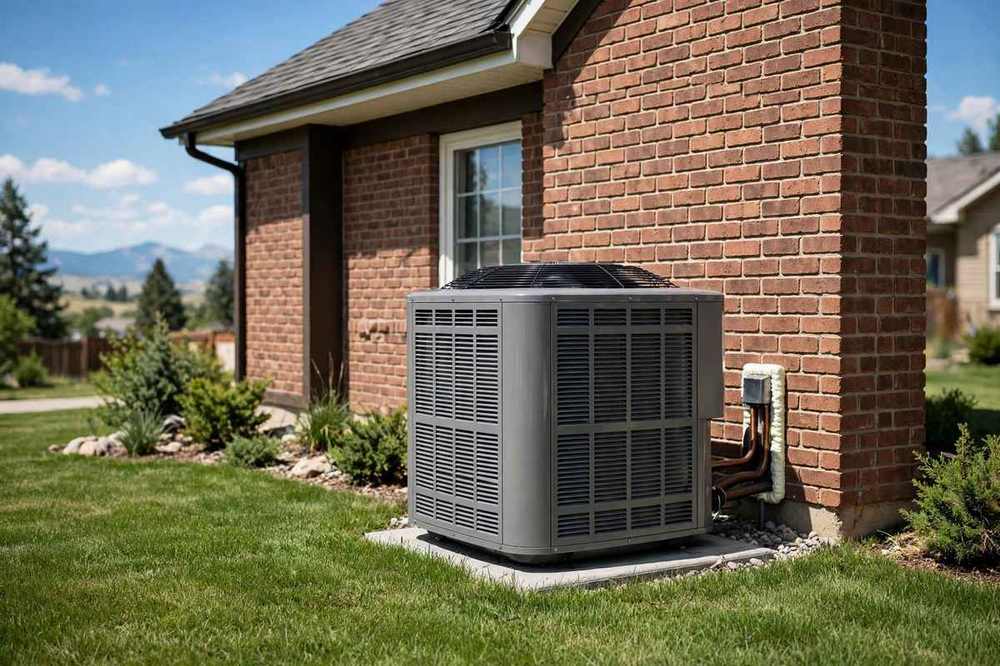
AC repair cost in Denver is really a question of which part failed, how old the system is, and what time of year you call. A capacitor on a six-year-old system and a compressor on a sixteen-year-old system are not the same job, and no honest article can give you one number that covers both. What this guide does is explain what drives the bill, when a repair is the right call, and when replacement starts to make more sense.
One thing to get straight first: the figures below for full system replacement come from Oct/Nov 2026 market data for the Denver area. They are market ranges, not Lion Tech Home Services prices. Your actual quote depends on your home, your equipment, and the scope of work agreed in writing before anything starts.
What AC repair costs in Denver depends on
Five things decide most of the difference between a small repair and a big one:
- The part itself. Electrical parts such as capacitors and contactors are the smaller jobs. Motors, coils, and compressors are the bigger ones, because the part costs more and the work takes longer.
- System age and refrigerant type. Systems built before 2010 often use R-22 refrigerant, which is no longer produced in the United States and is hard to find. A small leak on an R-22 system can turn into a much larger job than the same leak on a newer R-410A system.
- Access and attic conditions. A condenser on a flat, open side yard is quick to reach. An air handler crammed into a hot attic or a tight closet in a Capitol Hill bungalow takes longer, and that time is part of the job.
- Time of year. July demand is the peak. The same repair scheduled in spring, when a technician can reach you sooner and the system is not under heat-wave stress, is a calmer job all round.
- Whether the diagnosis was right the first time. A misdiagnosed repair costs you twice. We have walked into plenty of Denver homes where a supposed bad compressor turned out to be a failed capacitor and a tripped breaker. Proper diagnosis before any part is ordered is what keeps a small job small.
The parts that fail most in Denver summers
Denver summers punish air conditioners in specific ways. Afternoon highs regularly reach the 90s, dust and cottonwood fluff pack the outdoor coil, and the dry air carries fine grit into every fin. The failures we see most often are:
- Run capacitors. The part that gives the compressor and fan motor their starting kick. When it bulges or fails, the outdoor fan may spin while the compressor only hums, or the whole unit sits silent. It is the single most common warm-air call we run in July.
- Contactors. The electrical switch that starts the outdoor unit. Pitted contacts from years of cycling will stop the unit from starting at all.
- Blower motors. Common in systems over ten years old, especially in homes with poor airflow from clogged filters or crushed duct runs.
- Refrigerant leaks. A slow leak shows up as a coil that freezes, then a system that cannot keep up on a hot afternoon. Finding the leak matters more than topping the system off, because a topped-off system with an open leak will be low again by August.
- Coils. Evaporator and condenser coils fail from corrosion and dirty filters, and Denver dust does not help. A coil that is packed with cottonwood will overheat the compressor until the safety shuts it down.
- Thermostats. A basic thermostat swap is a small job; a smart thermostat that needs new wiring is a bigger one.
If your system is in a Capitol Hill home or another pre-war neighborhood, add one more factor: many of these houses were built without ducted cooling at all, and the AC was added later onto old ductwork. That history is why the same part can be a straightforward job in one house and a fiddly one in the next.
What drives your estimate up or down
When a technician quotes an AC repair, they are pricing the part, the time to reach and replace it, the refrigerant if the system needs a recharge, and the testing after the work to confirm the system holds. A quote that only names a part, with no diagnosis and no scope, is not a quote you can compare with anything. Ask for the diagnosis in writing, the options, and what happens if the first fix does not hold.
The biggest single driver is age. A six-year-old unit with a bad capacitor is a quick morning. A sixteen-year-old unit with a bad capacitor, a weak blower, and low refrigerant is a longer conversation about whether to keep putting money into it. As a rule of thumb, once repairs pass about 40 percent of the cost of a new system, replacement starts winning on the math. That is a judgment call, not a price, and it depends on the condition of the rest of the equipment.
Does AC repair cost more in summer in Denver?
Yes, and the reason is demand, not the parts. During a July heat wave every company in the city is booked, and emergency calls carry a premium over a planned visit. The cheapest way to avoid the summer markup is a spring tune-up before the first 95-degree week: a weak capacitor or low refrigerant found in May is a planned job, while the same fault found in mid-July is an emergency call. Booking a AC tune-up in Denver in spring is the highest-return maintenance most homeowners do all year.
Repair or replace: how to decide
Repair is usually right when the system is under ten years old, the failure is a single part, and the rest of the equipment tests well. Replacement starts to make sense when the system is past fifteen years, when a major part such as the compressor or coil has failed, or when two or more repairs have stacked up in recent summers.
For scale, Oct/Nov 2026 market data for the Denver area puts a full central AC replacement at roughly $4,500 to $9,500, depending on size and efficiency. That is market data, not a Lion Tech Home Services price, and it is the range to use when you are weighing a big repair against a new system. A repair that costs a large share of that range, on a system near the end of its 12 to 15 year life, is usually money better spent on replacement.
How can I save on AC repair in Denver?
- Change the filter every 60 to 90 days. Denver dust and pollen load is heavy. A clogged filter strains the blower and freezes the coil, and both of those start as a filter problem.
- Wash the outdoor coil each spring. Cottonwood fluff and dust packed into the fins will overheat the compressor. A gentle rinse from the inside out, with the power off, takes ten minutes.
- Book a spring tune-up. An AC maintenance visit in Denver catches weak capacitors and low refrigerant before they strand you in July.
- Ask about a maintenance plan. Plans usually include two visits a year and keep the system tested through the seasons. Worth it if you plan to stay in the house.
- Do not run a warm AC for days hoping it catches up. It will not, and a frozen coil left running can destroy the compressor.
When to call a professional
Call a professional when your AC blows warm air for more than an hour, trips the breaker repeatedly, leaks water inside the house, or makes a grinding or screeching noise. Those are not filter-and-hose problems.
Some things you can handle yourself: a dirty filter, a tripped breaker, a thermostat set to the wrong mode, or a condenser coil packed with cottonwood fluff. Reset it, clean it, and see if it holds. If it does not, stop there.
Refrigerant work is not a DIY job. It requires specialist refrigerant-handling training, gauges, and a recovery machine, and venting refrigerant is illegal. Electrical faults inside the air handler are the other line not to cross: a capacitor can hold a charge long after the power is off.
We at Lion Tech Home Services diagnoses first and explains the options second, so you know exactly what failed before any work starts. If you are weighing repair against replacement, we will tell you which one makes sense for the age and condition of your equipment, and you can decide from there.
Frequently Asked Questions
How much does AC repair cost in Denver?
It depends on the failed part, the age of the system, and the time of year. Small electrical repairs are the lower end of the range and major parts such as compressors and coils are the higher end. For scale, Oct/Nov 2026 market data puts a full central AC replacement at roughly $4,500 to $9,500. Ask for the diagnosis and the options in writing before any work starts.
What is the most common AC repair in Denver?
A failed run capacitor. It is the part that starts the compressor and fan motor, and it is the single most common warm-air call we run in July, especially after the first real heat wave of the summer.
Does AC repair cost more in summer in Denver?
Yes. Demand peaks in July and August, and emergency calls cost more than planned visits. A spring tune-up is the cheapest way to avoid the summer markup, because faults found in May are planned jobs, not emergency calls.
How can I save on AC repair in Denver?
Change filters every 60 to 90 days, wash the outdoor coil each spring, and book a tune-up before summer. Catching a weak capacitor early keeps a small job small, and a maintenance plan keeps the system tested through the seasons.
Is it worth repairing a 15-year-old AC unit?
Only if the repair is a small share of replacement cost. A single small part on a 15-year-old system can be worth it. A compressor or coil on the same unit usually is not, because you are putting new parts into a system near the end of its 12 to 15 year life.
Get help with HVAC in Denver
If your AC is blowing warm, short-cycling, or just making a noise you do not like, we will diagnose it and explain the options before any work starts.
Call Lion Tech Home Services at (720) 806-7634. We are open 24 hours, 7 days a week, and we serve Denver homes including central air conditioning services across Denver.